
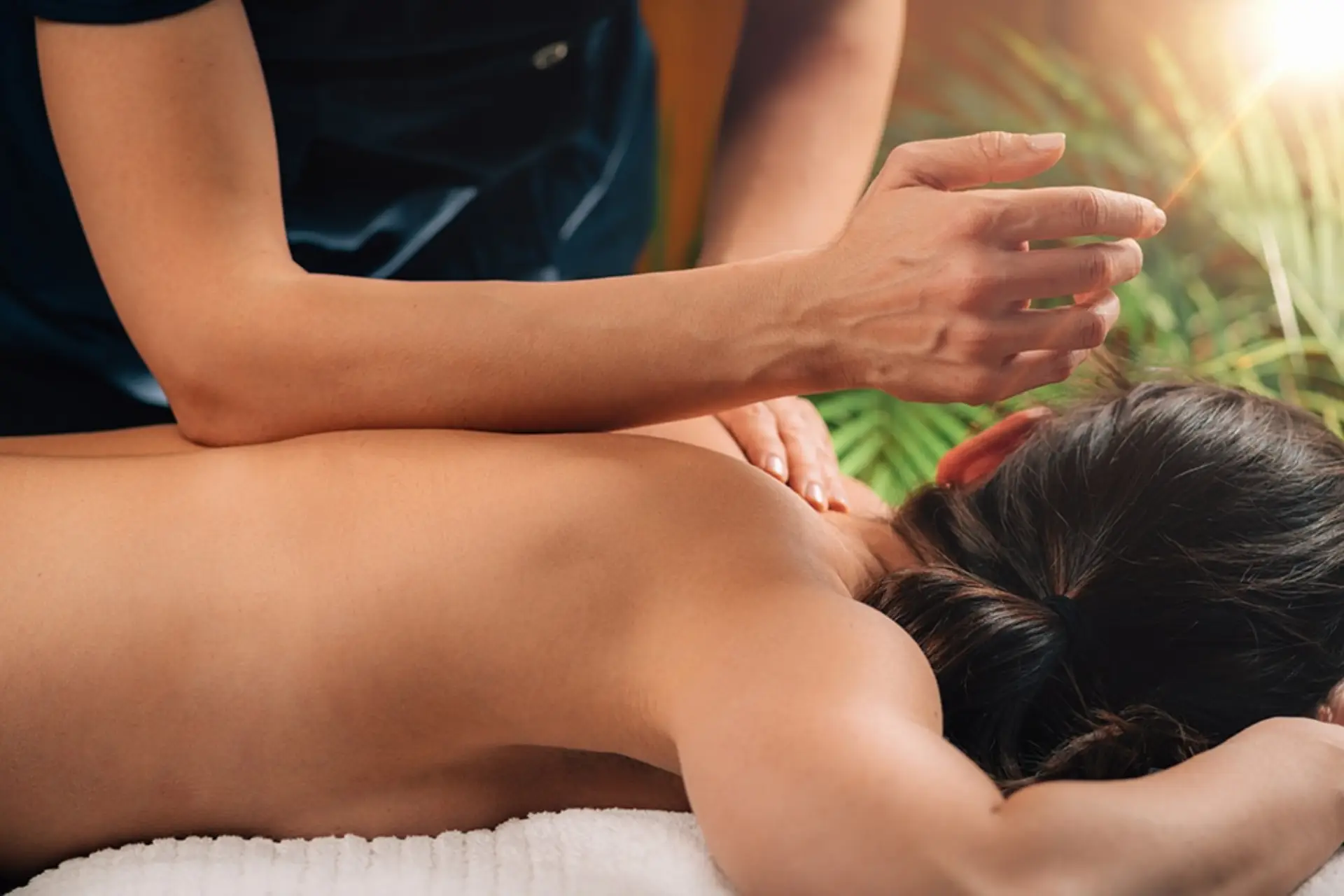
The main difference between Swedish and deep tissue massage is pressure and purpose: Swedish uses light, flowing strokes for relaxation, while deep tissue uses firm, sustained pressure to target chronic tension.
Both cover the same areas of the body — the choice comes down to what you actually need from the session.
What Is Swedish Massage?
Swedish massage is the classic full-body relaxation treatment. It uses long, gliding strokes, kneading, and light circular movements to ease general tension, improve circulation, and calm the nervous system.
What Is Deep Tissue Massage?
Deep tissue massage uses slower strokes and more concentrated pressure to reach deeper layers of muscle and connective tissue — typically chosen for persistent issues like a tight lower back or stiff shoulders from desk work.
Side-by-Side Comparison
| Swedish Massage | Deep Tissue Massage | |
|---|---|---|
| Pressure | Light to medium | Firm, sustained |
| Best for | General relaxation, first-time clients | Chronic tension, muscle knots |
| Feel afterward | Loose, calm, often sleepy | Sometimes mild soreness, then noticeably looser |
Choose Swedish if you want to unwind or have no specific problem area. Choose deep tissue if you have a persistent knot or chronic pain. Not sure? Tell your therapist what you’re feeling — they can blend both within one session.
Frequently Asked Questions
Does deep tissue massage hurt?
It can feel intense on tight areas, but it shouldn’t be sharply painful. Speak up if pressure feels like too much — a good therapist adjusts immediately.
Which is better for stress relief, Swedish or deep tissue?
Swedish massage is generally better for pure relaxation and stress relief, since its lighter strokes calm the nervous system rather than work into deep muscle tension.
Can I request more or less pressure during my session?
Yes, always. Pressure is adjusted in real time based on your feedback, regardless of which treatment you book.
Key Takeaways
- Swedish: Light pressure, best for relaxation and first-timers.
- Deep tissue: Firm pressure, best for chronic tension and knots.
- Can’t decide? Tell your therapist what you’re feeling — pressure adjusts in real time.
Whichever style fits you best, our certified therapists tailor pressure and technique to your needs.